

e.g. Issue 1: "False Starts" | Glenn Diaz & Lesley-Anne Cao
Our first issue features the original drafts from the award-winning novel "Yniga" by Glenn Diaz and artwork from contemporary visual artist Lesley-Anne Cao.


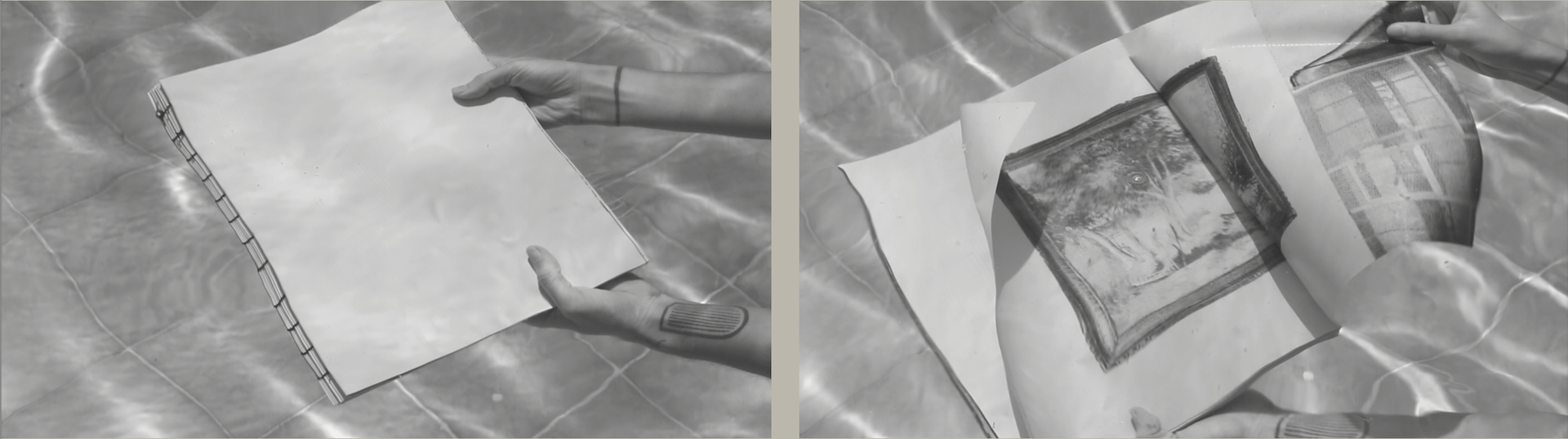
Issue 1 of e.g. journal opens onto the teeming panorama of the barangay of Yñiga, much as Wilfrido Nolledo’s But For the Lovers (Exploding Galaxies, 2023) centers on the thick description of the boardinghouse of Ojos Verdes. But pruning back such sprawling life to allow for a clear narrative to emerge is part of the process of writing: enabling others to see this world-newly-shaped outside of your own cacophony, outside of your own imagination.
What we have here is the gift of Glenn Diaz’s false start to his novel—an early, alternate opening to Yñiga that he ultimately abandoned. In this issue, it both stands on its own and looks onto what it paved to take its place.
Lesley-Anne Cao’s artistic process of creating studies helps to highlight such starting and restarting and pruning, and draws an especially marked contrast when placed alongside her finished work—books treated as objects, stacks set already in stone.
—Nicole CuUnjieng Aboitiz, Editor
Yñiga False Starts
I tried to do a Rizal in this, one of the false starts that I had for my sophomore novel Yñiga. A cast of characters large enough for omniscience, a LeGuinesque narrator narrating in decorous sentences, a crocodile even, though this last one was subliminal, which I didn’t realize was straight out of the Noli until much later.
The attempt went to about three chapters or so, easily 18,000 words, before its progress was arrested. Too slow, my PhD supervisor said—a reminder that the creative component for the thesis was closer to a novella at 60,000 words—you’re already a third of the way and still introducing characters, what gives? Samples were identified. Pedro Paramo, As I Lay Dying, Sula, a ton of Cesar Aira. Two weeks later, I sent in a new first chapter, brisker and less profuse, hyper-focused but less cacophonous, and the reply was unambiguous: this is it; you’ve nailed it. I celebrated. Revisiting the false start years later, I was surprised by the grief that this beginning promised and was never allowed to deliver, a talkative child embarrassed into silence. But I’m also comforted by the (Borgesian) idea that the published version, finite as it is, contains all the ghosts and specters of the unfinished ones, itself a provisional form toward which the other invisible false starts accumulated: words replaced with better ones, paragraphs and sections moved, characters recalibrated to be less monstrous, place names redacted, narration made even more unreliable, etc., etc. And even if little from them survived the false starts still meant, at the very least, time spent in the world of the would-be book. Nothing, in writing as in life, is wasted.
—Glenn Diaz
*
Chapter 1
Sleep was beginning to finally visit the insomniacs and drunkards of Barangay Bagong Pag-Asa when a commotion louder, more ominous than the usual domestic squabble erupted from the second floor of Mang Calixto’s bakery. Footfalls on crunchy GI sheets. Objects falling on hardwood. A female screech. And when it was over, out came, from the side door below, the dazed, emaciated figure of the retired general. Dazed but also smiling, the remnant no doubt of a megalomania that ran unchallenged for too long. Escorted by soldiers in high battle gear, the decorated butcher of peasants and activists looked jolted from sleep, hair long and gray, a shadow of his former self.
From across the narrow street, Yñiga’s view grew increasingly obstructed, first by an ambulance, then several menacing black SUVs, and finally a van that disgorged a reporter and a yawning cameraman. Soon the scene was engulfed in a forest of people’s bodies. Among the early birds: the gang that always gathered in the lugawan nearby, the mourners from a wake down the street still carrying their styrofoam cups, a group of high schoolers practicing a play in the makeshift basketball court, the stay-in workers of the plastic factory by the river. Then the dogs, the cats, the children who must have been awaken by the blare of the siren, followed by their mothers, who quickly found each other amid a volley of conjectures. One by one the bright glare of fluorescent traced the outlines of shut windows, and the glow of ten-watt bulbs peeked from behind the patchworks of plywood and concrete, no doubt interrupting sleep and weed smoking and hurried trysts. A street away the psychedelic sounds of a videoke machine abruptly stopped. Above the roofs, like an alien protrusion, the lights on a far-away derrick flickered. A rooster crowed, hours ahead of schedule. The colossal balete next to the chapel and barangay hall appeared to lean closer to the site of the capture.
Unable to see a thing, Yñiga reached to the ground to pet the furry insistence on her legs: Jestoni surely roused by the ruckus, the faint alarm in the air not unlike oncoming rain. Light sleepers, she and the cat, while the train could derail off the tracks nearby, careen headlong into their homes, and Diego would still be knocked out on their mattress. From the corner of her eye, she saw Denise step out of her bungalow, the biggest thing in the area, and really the only one which most resembled the kind of proper house drawn by all school-age children the world over. She was followed by her American lover Brad, who proceeded, as was his wont, to narrate the scene in sing-song English. Lourdes, who collected the street’s garbage, arrived with her cart, then loaded with wooden planks and plastic bottles and discarded furniture, the pile twice her size; from her wrist, as usual, hung the mysterious red purse that she always carried around. She and Yñiga caught each other’s eyes, exchanging the most imperceptible of nods. More dogs. Someone alighted from a pedicab and winced in pain as she took the first few steps—Jennifer, still wearing the bright orange beret that was part of her uniform at the motel.
What happened? Jennifer called out. Yñiga said the name of the general, and Jennifer sighed in relief. Thought it was a fire. She rubbed her bare arms. Or the crocodile. Not sure which is worse. What happened there? Yñiga asked, pointing to her feet. Jennifer shrugged. They took away our chairs. Better for the back, they said. Helps me stay up so no complaints. Didn’t I tell you to quit and sing full time? Yñiga asked. If only it were that easy! Jennifer said. Wait, so all these years Mang Calixto had been— she pointed to the bakery’s second floor. Only for the past three months, Yñiga said. His wife’s the cousin of the general’s aide, and they hand-picked this area, even with all the people here who want him dead, like hiding in plain sight, they said. He’d wear a wig (Jennifer’s mouth opened) then just walk out and get a bowl of lugaw and tokwa. Jennifer covered her mouth. So he could’ve bought lugaw next to me? Mang Polly, who owned the printing shop next to the bakery, lifted his cane toward them and called out, Hey how’d you know all those details? Jennifer laughed. Your hearing’s amazing for your age, Mang Polly! The old man chuckled. It’s the malunggay that I put in my rice every lunch, he said, gesturing vaguely to the tiny garden beside his shop. And I’m a widow. Seventeen years. Orgasm weakens your hearing. I read that somewhere.
What? Yñiga asked in a near shout, and it took some time before they got the joke.
Their laughter was drowned out by the crowd-parting blare of the ambulance, which must have carried the general, and the baleful beeps of the SUVs, on the backseat of one Mang Calixto and his wife sat, probably stunned. Both vehicles sped off to the direction of the main road, the van in their trail. She couldn’t tell if the gentle rustling in the air was applause or the usual shower of leaves from the balete. In the fresh silence: the slow, disappointed slapping of rubber slippers on pavement, the murmured summary of what had just taken place, the first notes of a videoke machine being restarted.
Turn me loose from your hands
Let me fly to distant lands
Yñiga watched the crowd recede to reveal the doomed bakery, just this morning the site of furiously wholesome communal activity, the source for years of warm pan de sal and warmer gossip for everyone within a five-hundred-meter radius. Now it was dark and boarded up, cordoned off by taut tape, its dirty roll-up door set to adorn the front pages of tomorrow’s newspapers. She gave Jestoni, asleep on her feet, a wake-up scratch behind the ears. Mang Polly of course knew why she knew the details of the arrest. She might begin close to the end, just hours ago, when she made the anonymous tip to the military. Or a couple of months ago, when a routine writing assignment led her to uncover the curious link between their little lives in Barangay Bagong Pag-Asa and the fugitive general who for three years evaded a massive government manhunt. Or earlier still, close to the beginning, in fact, when she saw a garbage collector casually jump off the back of a truck to hand Mang Calixto a package. An innocent, if odd, transaction, and she would have forgotten about it had she not seen Jennifer come home carrying something similar weeks later: both the size of a shoebox, both wrapped in shiny orange plastic, and both bearing the logo of a motel with a sleazy reputation, but which was also famous for its crispy pata and pancit canton, a favorite, it seemed, of people in cramped, windowless spaces…
You are currently reading an excerpt of Glenn Diaz’s unpublished chapters. For more, read the full issue or buy a print copy through our website.
Studies
Artwork by Lesley-Anne Cao

Proposal: From Manila and then in Jakarta, I will collect material that possess two simple characteristics: white and powdery. This will include things like various kinds of salt, sugar, flour, flavoring, medications, talc, and tawas (potassium alum), among others, and including those that are specific to either location, and will be assembled as a singular form within the exhibition space. A complete list of all included material will function as the artwork label.
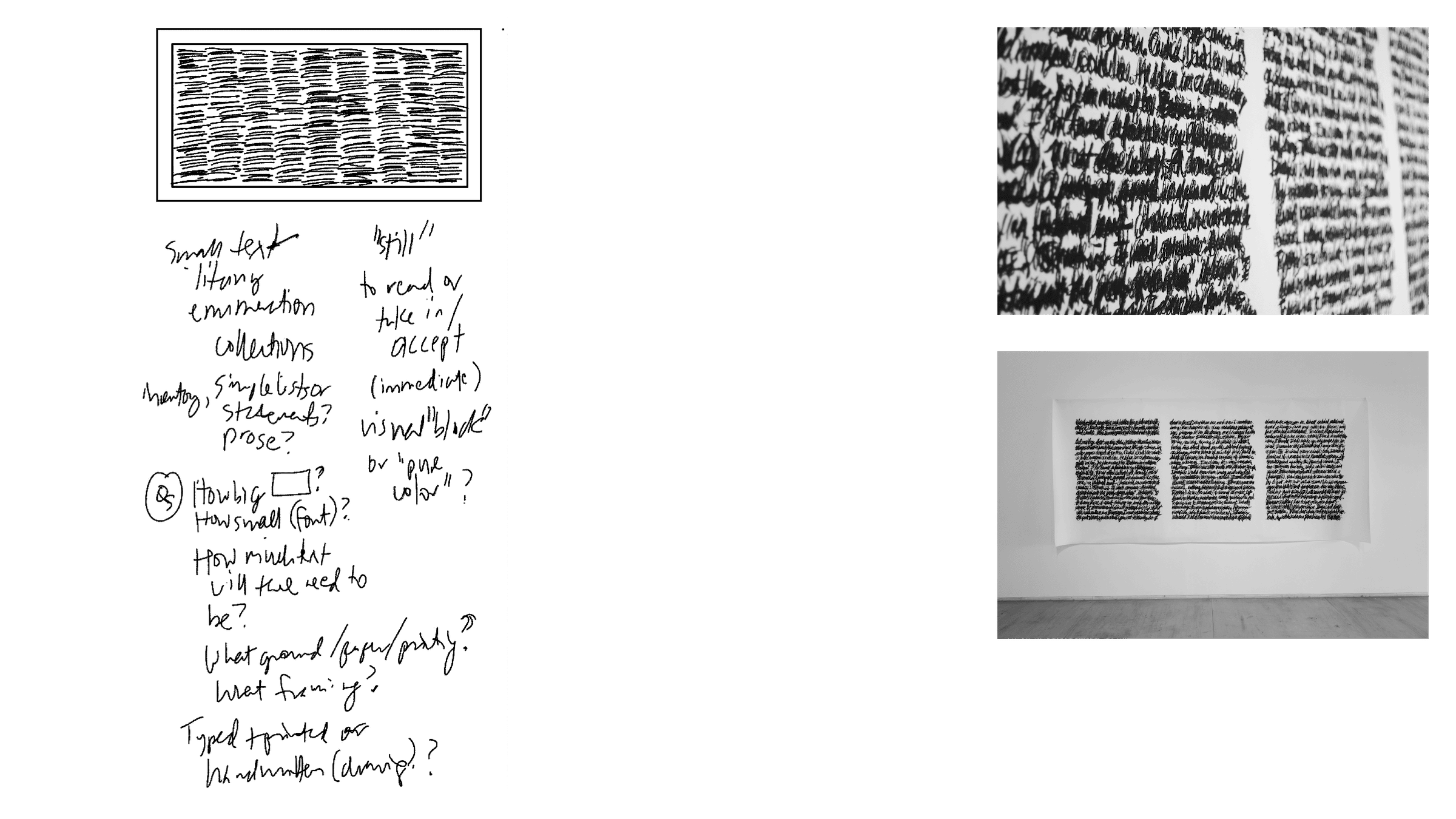
A series of exercises in marking surfaces, in making intentions. A catalog of framed gestures. A constant calculation that exists in the process with the deliberate choice of material, media, and technique, with a proclivity towards the insolence of charcoal to the steady restraint and nervous slips of the hand. This is an archive that traces the artist’s own thread of interests: stories of lost drawings, musical phrases singing about breath, some boys, accumulated title drafts, a puzzle of pencils, and a vision of a dog (a gift). A physical, rudimentary, and repeated act rendered line after line until the tangible image comes to its fore, whose focus is a type of disobedient play rather than precision or producing a perfect copy. This, at its core, is a matter of attention and intention: what becomes the weight of drawing, of a line or of a shade? (IAF/LAC)

Having been invited to participate in an art exhibition for a fashion magazine, I decided to work with the idea of fashion writing and look into literary texts that contain references to clothing or beautification rituals. Passages were lifted from novels and poems where concepts of age, psychology, and eroticism offer a different perspective on how we look, what we wear, and why we wear them.
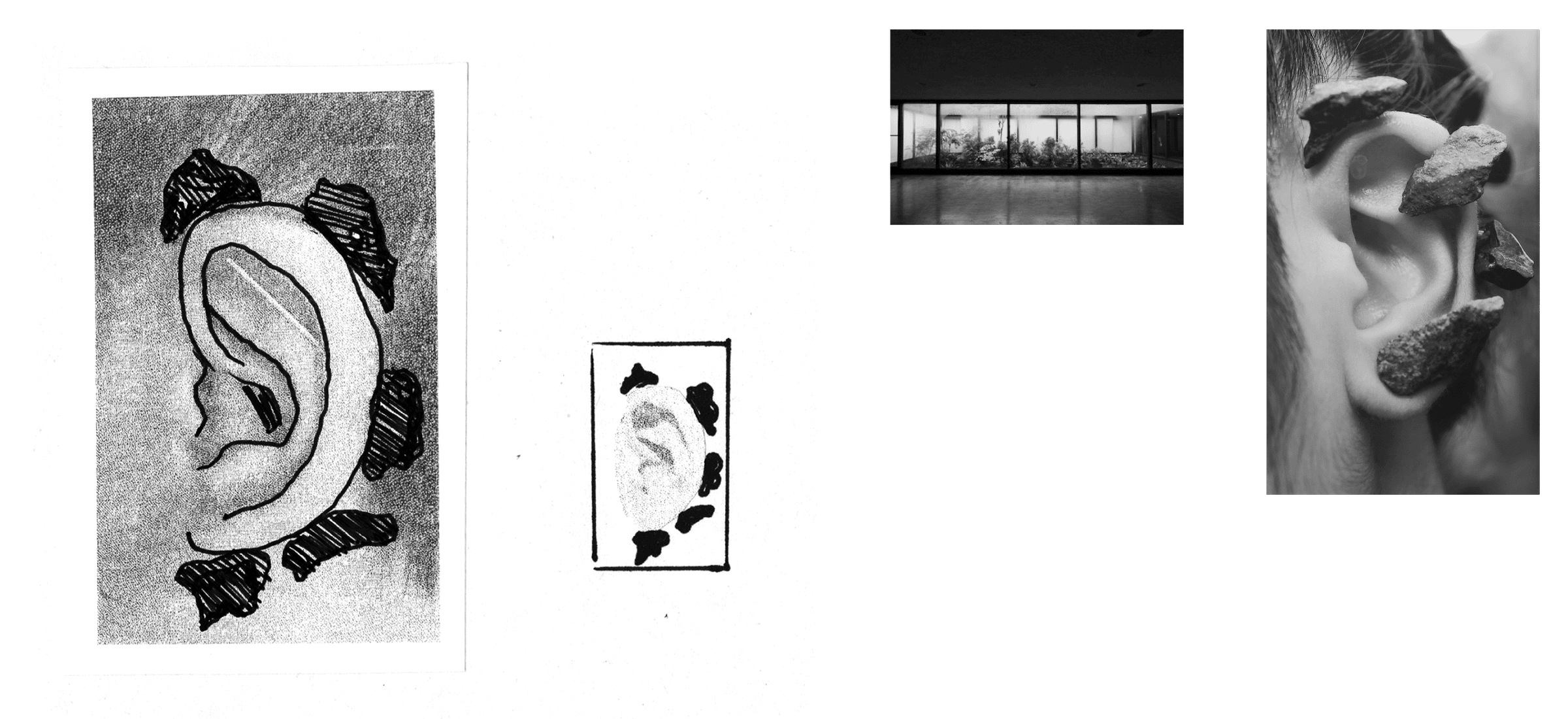
A ray of light yawns, stretches, and embraces the mouth of a plastic pot. The window nearby recognizes it as a fading rainbow, and greets the child inside: look, it is morning (text: Michelle Esquivias).
You are currently viewing a selection Lesley-Anne Cao's studies. For more, read the full issue or buy a print copy through our website.
Interviews
Glenn Diaz
1. Had you decided to go with this alternate opening to Yñiga rather than the one you did ultimately publish, how do you think it would have changed the novel that followed it?
It would have been a different book even if the key thematic nodes and contexts are the same, i.e., the spate of political killings in 2000s Philippines and counterinsurgency. The narrative would have stayed in the city, the fire would have been the climax instead of the starting point, and it would have dug more deeply into the other characters instead of just Yñiga and the family.
2. Do you have any rituals associated with your writing process; could you give us an example of one?
More a simple requirement than ritual—just constant background noise and a sturdy, comfortable chair.
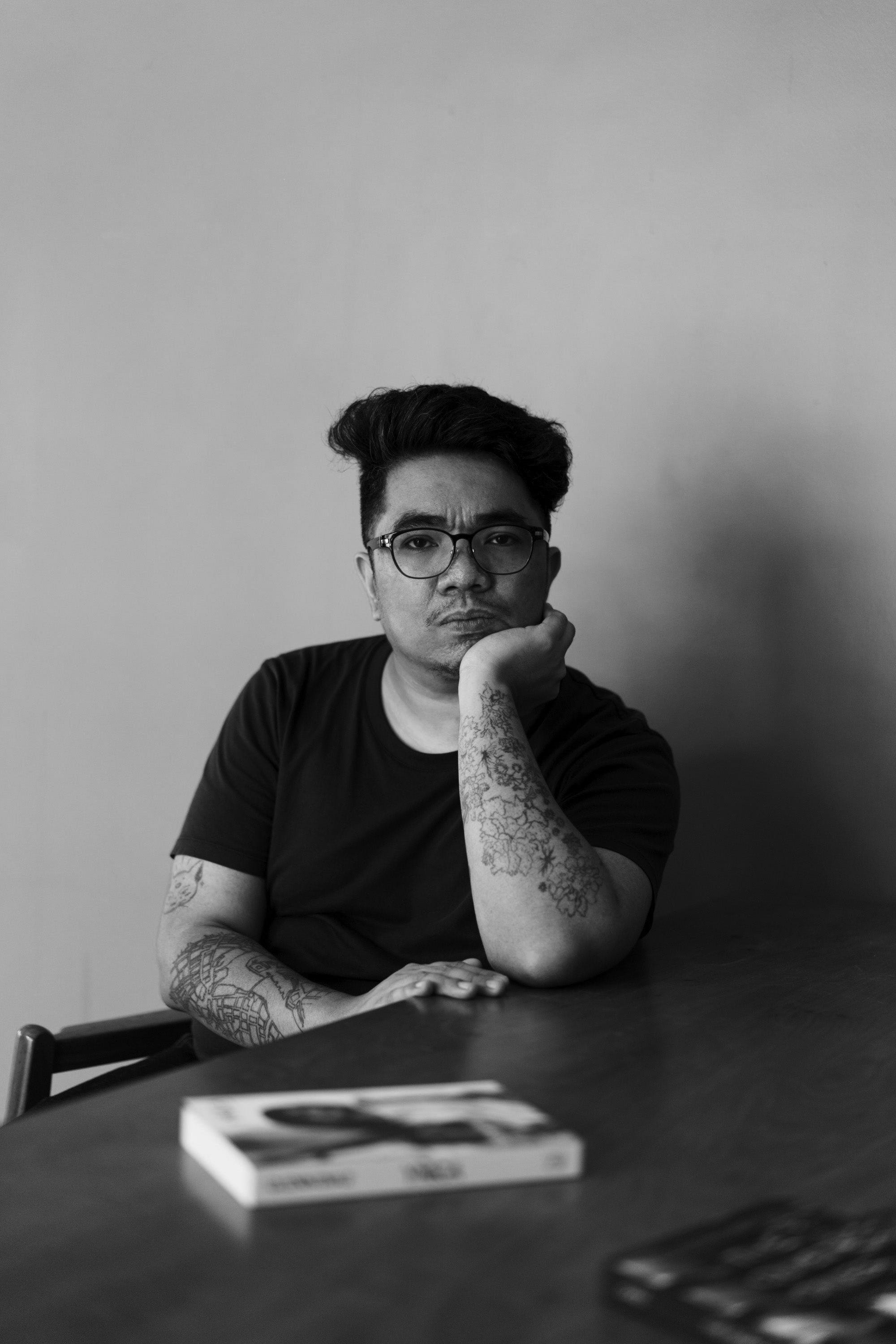
Glenn Diaz’s books include The Quiet Ones (2017) and Yñiga (2022), recipients of the Philippine National Book Award, and When the World Ended I Was Thinking about the Forest (2022), published by Paper Trail Projects. His writing has appeared in The New York Times, Rosa Mercedes, Liminal, The Johannesburg Review of Books, and others. Born and raised in Manila, he holds a PhD from the University of Adelaide and currently teaches with the Department of English and Comparative Literature at the University of the Philippines Diliman.
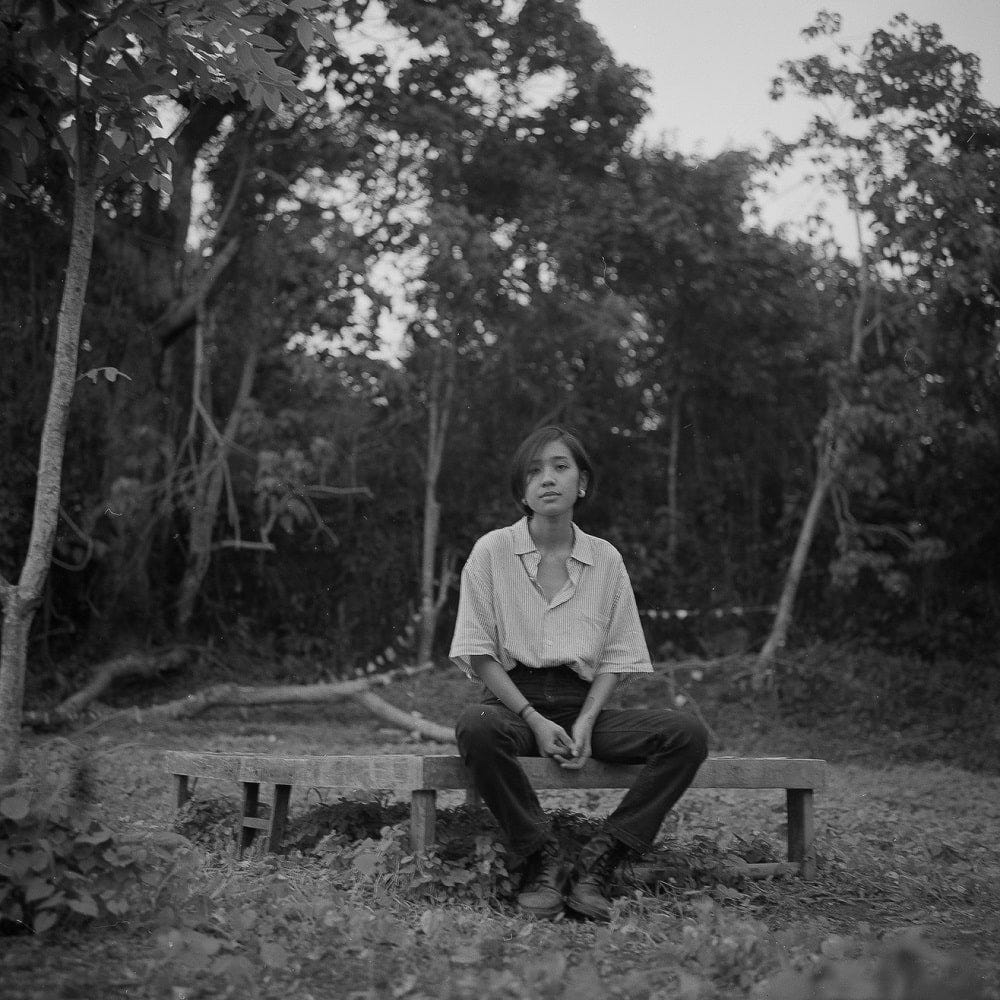
Lesley-Anne Cao
1. Books often enter your work as objects. Could you briefly elaborate the role they’ve occupied in your pieces, for example, in Dreams of speaking (Book for weeds)?
I’m interested in how the book is often seen as a solid object but is actually fluid and malleable as form and idea. In my work I think of the book as time (a film, a clock), body (substance, system, data), weight (a box, a rock), activity (reading, playing, building), construction (a chair, a code), choreography (an opening, a lift, a scroll, a turn), et cetera.
Some works, such as Dreams of speaking (Book for weeds) and Amphibian palm, reimagine the book as a plastic object and suggest the potential to embrace or endure different environments or conditions. Overall, they are prompts to reconsider what constitutes a book, what constitutes reading. They play with and go in between legibility, intelligibility, and meaning-making. They explore possibilities of the book as medium and metaphor for germination, transformation, improvisation, endurance, and decay.
2. What is one part of your artistic process that remains unseen?
Everything that is not perceivable in the work itself or in documentation elsewhere.